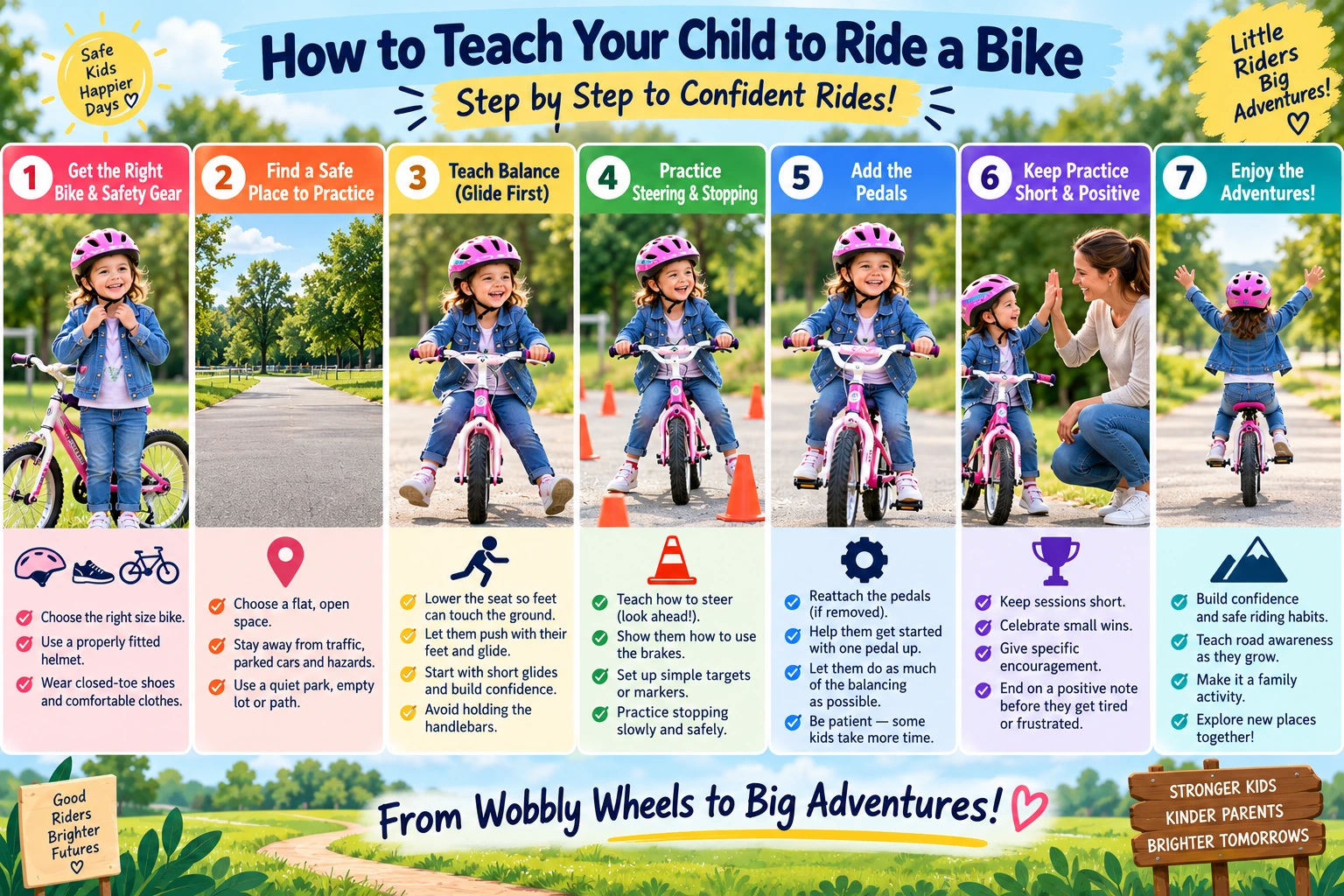
A step-by-step visual guide showing parents how to teach children to ride a bike, covering proper safety gear, balance, steering, braking, pedaling, practice, and encouragement for a safe and confident riding experience.
Teaching your child to ride a bike is one of those exciting childhood milestones you’ll both remember for years. With patience, encouragement, and the right approach, those first wobbly rides can gradually turn into confident adventures. The key is to keep the experience safe, positive, and fun.
Whether your child is moving up from a balance bike or getting on a bicycle for the first time, this step-by-step guide can help make learning easier for both kids and parents.
1. Start With the Right Bike and Safety Gear
Before your child begins riding, make sure the bicycle is the right size. Your child should be able to comfortably reach the handlebars and controls. When learning to balance, being able to place their feet on the ground can help them feel more secure.
A properly fitted bicycle helmet is essential. Make sure it sits level on your child’s head and is securely fastened according to the helmet manufacturer’s instructions.
Closed-toe shoes and comfortable clothes are also good choices. Avoid loose clothing or shoelaces that could become caught in moving parts of the bicycle.
2. Choose a Safe Place to Practice
The right practice area can make a huge difference.
Look for a flat, open space away from traffic, parked cars, steep hills, and other hazards. An empty paved area, quiet park path, or another legal traffic-free space can work well.
Avoid beginning on a busy sidewalk or street. Your child needs room to wobble, stop, and make mistakes without worrying about vehicles or crowded surroundings.
3. Teach Balance Before Pedaling
Balance is one of the most important skills a new cyclist needs to learn.
If possible, lower the seat enough for your child to comfortably put their feet down. On a suitable bike, removing the pedals temporarily can also allow a child to practice using it like a balance bike.
Encourage your child to push along with their feet and then lift them briefly to glide.
Start with very short glides. As your child becomes more comfortable, encourage slightly longer ones.
Try to avoid holding the handlebars while your child rides. Children need to learn how the bike responds to their own movements. If they need support, you can steady them gently around the torso or back while allowing them to control the handlebars.
4. Practice Steering and Stopping
Before adding speed, teach your child how to slow down and stop.
Show them how their bicycle’s brakes work and let them practice using them while moving slowly. Different bicycles can have different braking systems, so make sure your child understands the specific bike they are riding.
Set up simple targets or markers and ask your child to ride toward them, gently steer around them, and stop at a designated point.
Remind them to look where they want to go rather than staring down at the front wheel. Looking ahead can make steering and balance easier.
5. Add the Pedals
Once your child can glide, steer, and stop with reasonable confidence, it may be time to start pedaling.
If you removed the pedals earlier, put them back on securely.
Help your child position one pedal slightly upward so they can push down on it to begin moving. Give gentle support if necessary, but allow your child to do as much of the balancing as possible.
Some children understand pedaling quickly. Others need several practice sessions.
Both are completely normal.
6. Keep Practice Short and Positive
Children can become tired or frustrated surprisingly quickly when learning a new physical skill.
Instead of one long lesson, try shorter practice sessions. Finish while your child still feels positive rather than continuing until everyone is exhausted.
Celebrate small improvements.
Maybe today your child balanced for three seconds. Tomorrow it might be five. Perhaps they finally remembered to look ahead or managed to stop without help.
Those little achievements are real progress.
Try saying things such as, “You balanced much longer that time!” or “Great job remembering to look ahead.”
Specific encouragement helps children notice what they are learning.
What If Your Child Is Scared?
Fear is understandable. Riding a bicycle requires children to coordinate balance, movement, steering, and stopping while learning to trust themselves.
If your child becomes nervous, reduce the difficulty.
Go back to walking with the bike, short glides, or practicing braking. Let your child become comfortable before moving on.
Avoid comparing them with siblings, classmates, or neighborhood children. Some kids learn in an afternoon, while others need many sessions.
The goal is confidence—not speed.
Teach Bike Safety From the Beginning
Learning how to pedal is only part of learning how to ride.
Children also need age-appropriate bicycle safety habits. Teach your child to wear a properly fitted helmet every time they ride and to stop before entering streets, driveways, or intersections.
Children should learn to watch for cars, pedestrians, other cyclists, obstacles, and changing road conditions.
Where children are allowed to ride—and whether they are ready to ride near traffic—depends on their age, skills, supervision, and local laws. Younger or inexperienced riders should practice in safer traffic-free environments with adult supervision.
As your child becomes more independent, continue reinforcing safe riding habits and the road rules that apply where you live.
Common Mistakes Parents Can Avoid
One common mistake is pushing a child to progress too quickly. If your child is still struggling with balance, adding pedals and speed may make learning more stressful.
Another is holding onto the bicycle too tightly. Although your instinct may be to prevent every wobble, your child needs opportunities to feel how the bicycle balances.
Also, try not to turn practice into a test.
Falling, stopping suddenly, putting a foot down, or riding only a few feet are all normal parts of learning.
Make It a Family Activity
Once your child becomes comfortable riding independently, cycling can become a wonderful family activity.
Start with short rides in safe places and gradually increase the distance as your child’s skills and stamina improve.
Bring water, take breaks, and choose routes appropriate for your child’s ability.
Family bike rides aren’t just exercise. They can be opportunities to explore the neighborhood, visit parks, spend time outdoors, and create memories together.
From Wobbly Wheels to Big Adventures
Watching your child ride independently for the first time can be an unforgettable parenting moment. But getting there doesn’t need to be a race.
Start with the right equipment, focus on balance, introduce steering and braking, add pedaling when your child is ready, and keep plenty of encouragement in the process.
A few wobbles are part of learning.
With practice and patience, your little rider can gain not only a new skill but also confidence, independence, and a whole new way to explore the outdoors.
Little riders, big adventures!
Leave a Reply