A reward chart can feel like magic. For a week, your child races to brush their teeth just so they can color in a star. Then, in many homes, the magic wears off: the chart curls up on the fridge, the stars stop, and everyone quietly forgets about it.
The difference between a chart that works and one that fizzles is rarely the chart itself. It’s how you set it up. Here’s a simple, step-by-step way to use a reward chart with children aged 2 to 8, plus free printable charts you can start using tonight.
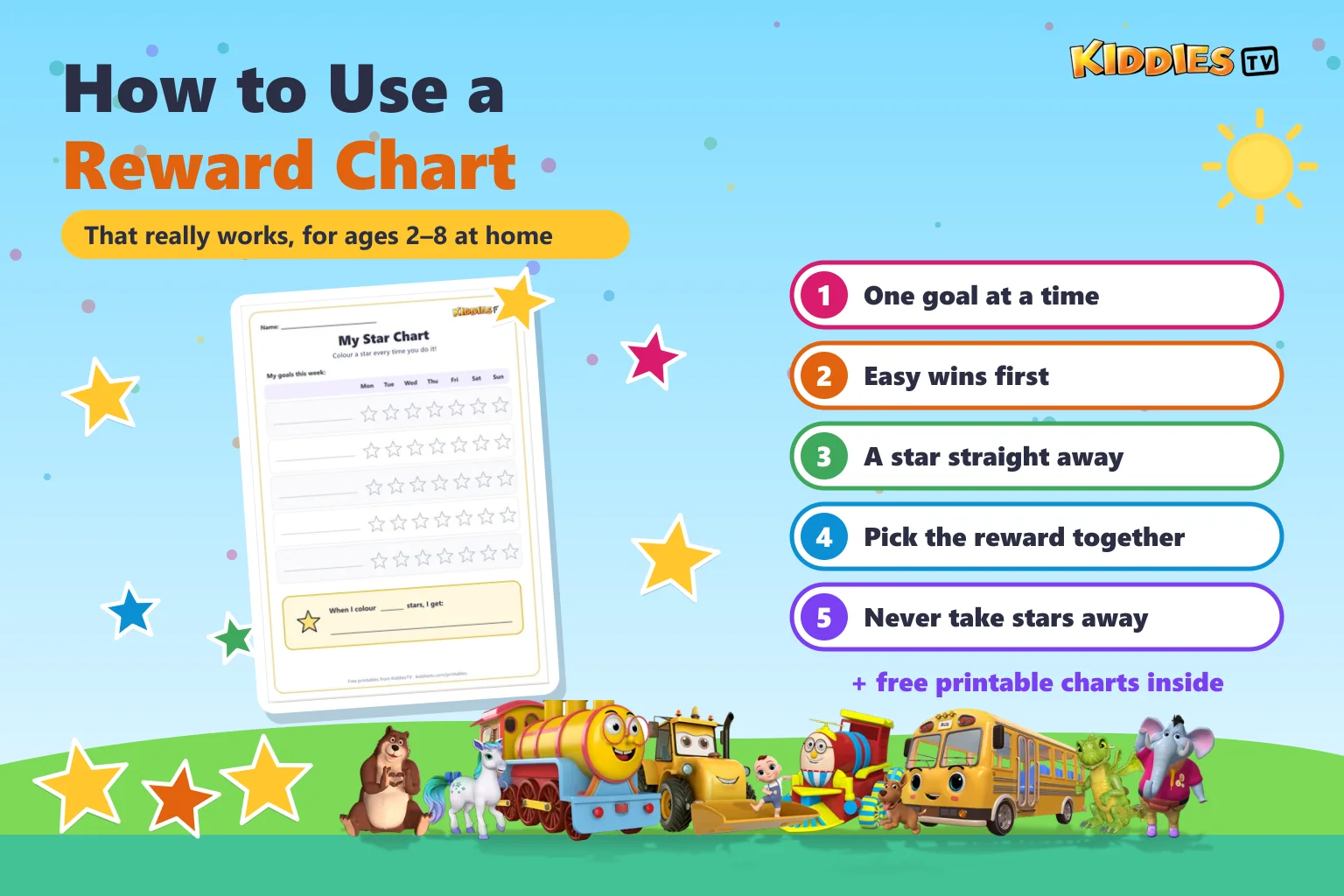
In short: choose one clear goal, make the first stars easy to earn, give each star straight away with specific praise, agree on a small reward together, and never take a star away.
Why reward charts work
Children repeat what gets noticed. A chart turns a goal into something your child can see, every star is a small moment of praise, and the reward at the end gives them something to look forward to. It changes how the day feels for you too: instead of reminding and nagging, you get to cheer progress.
Used well, a chart is a stepping stone, not a forever system. Once the new habit sticks, the chart can go and the habit stays.
How to set up a reward chart in 8 steps
1. Choose one goal to start
Pick one thing you’d like to see more of, especially with toddlers and preschoolers. “Brush teeth morning and night” or “stay in bed after lights out” works far better than a list of ten things. You can add more goals once your child understands how the chart works. Many children aged five and up can manage two or three goals at once.
2. Make the goal clear and positive
“Be good” is too vague for a child to aim at. Describe exactly what you want to see, in words your child understands: “put your toys in the box before dinner,” not “stop making a mess.” Saying what to do, rather than what not to do, gives your child a clear target and keeps the chart about success.
Try this: ask your child to show you what the goal looks like. If they can act it out, the goal is clear enough.
3. Make it easy to win at first
The first few days decide whether your child believes in the chart. Start with something they already manage some of the time, so the first stars come quickly. Once the chart is part of the routine, you can raise the bar a little. A chart that’s too hard teaches the opposite of what you want: “I can’t do this.”
4. Match the chart to your child’s age
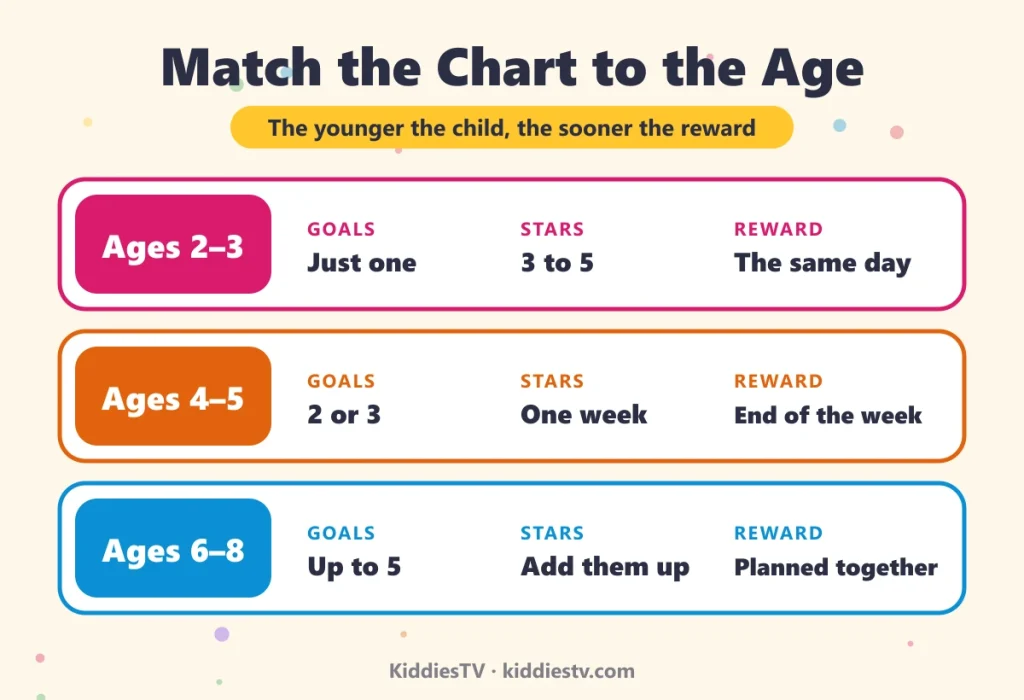
The younger the child, the sooner the reward needs to come. A week is a very long time when you’re two!
- Ages 2 to 3: one goal, three to five stars, and a small reward the same day.
- Ages 4 to 5: two or three goals, a week of stars, and a reward at the end of the week.
- Ages 6 to 8: up to five goals or chores, with stars that add up to a bigger reward they help plan.
5. Choose the reward together
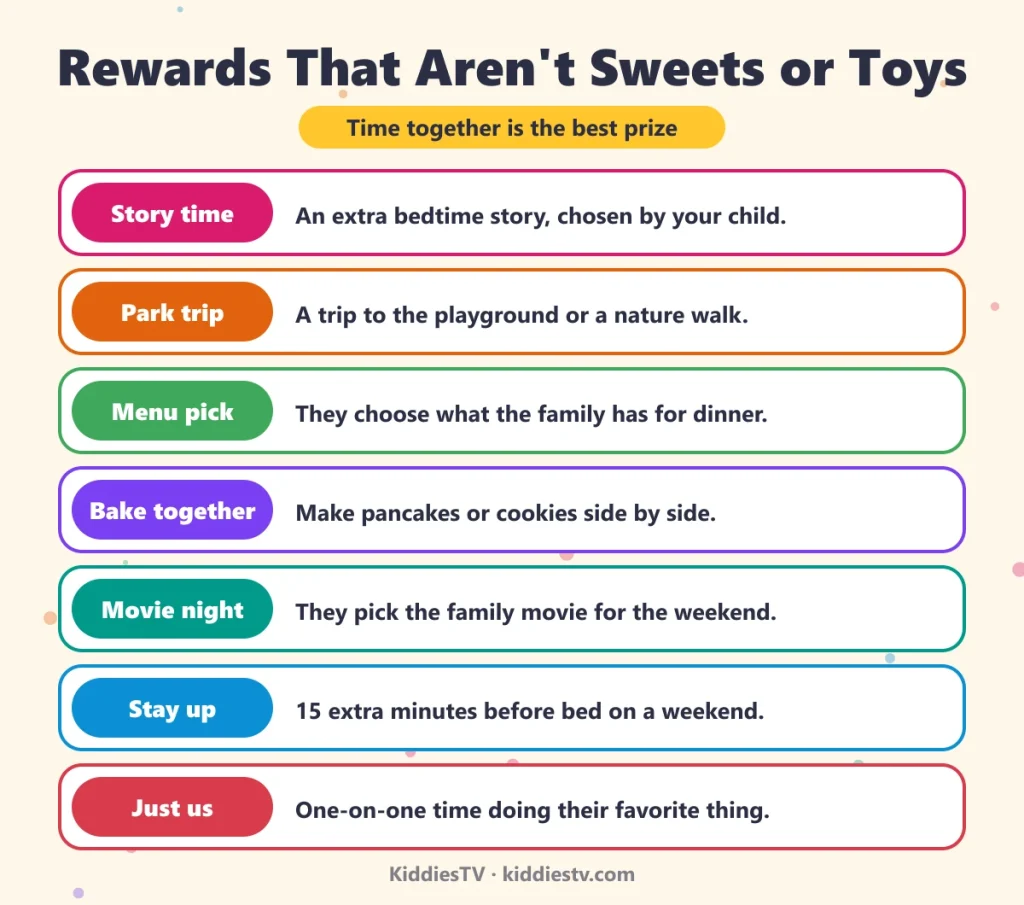
Let your child help pick the reward. It’s far more motivating when it’s their idea. Write it on the chart so it’s always in view. Rewards don’t need to cost money, and time together is often the most exciting prize of all. Where you can, keep sweets out of it, so food doesn’t turn into a prize.
6. Give the star straight away, with specific praise
Young children link the star to what they did only if it comes right after. Color in the star (or add a sticker) together as soon as the goal is done, and tell your child exactly what they did well: “You put on your pajamas all by yourself. That’s a star!” Specific praise teaches far more than “good job” ever can.
7. Never take stars away
A star that has been earned stays earned, even after a hard day. Taking stars away as a punishment turns the chart into a source of worry, and children soon lose interest. If the goal doesn’t happen, simply say, “Let’s try again tomorrow,” and move on.
8. Check in, then fade the chart out
Look at the chart together each evening and count the stars so far. When the new habit has been going well for a couple of weeks, celebrate, then either retire the chart or move on to a new goal. Keep the praise going after the stars stop. That’s what makes the habit last.
Free printable charts to get you started
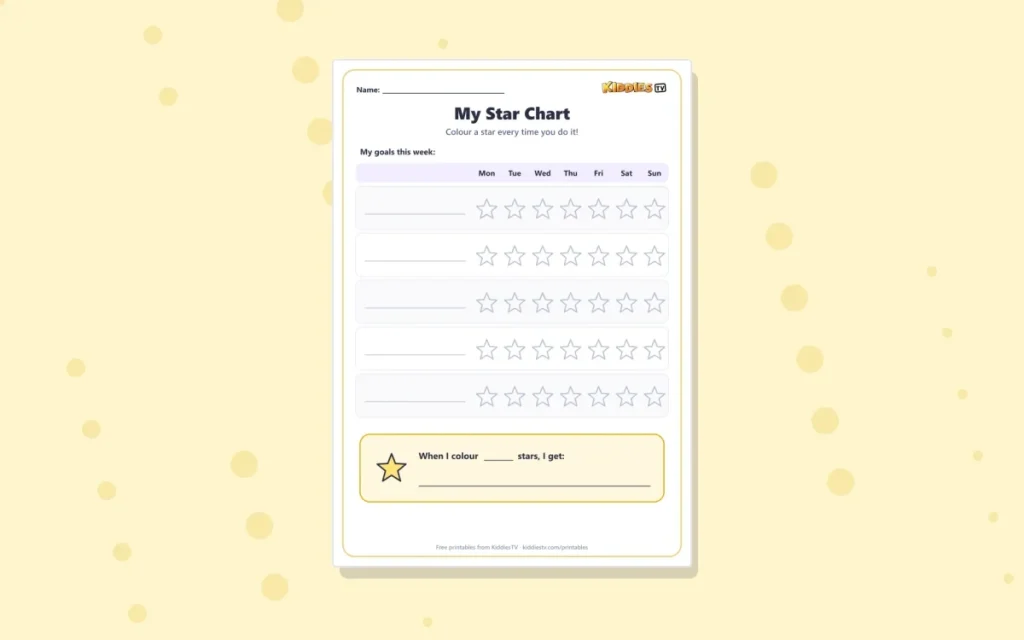
Our free Star Reward Chart has space for five goals of your own, a star to color for every goal on each day of the week, and a box to write in the reward you choose together. It’s a free PDF in A4 and US Letter size, with no sign-up.
For particular goals, these free charts can help too:
- Potty Training Chart (ages 2 to 3): 30 numbered stars, one for every time your toddler uses the potty, and a reward box for when the chart is full.
- Morning and Bedtime Routine Charts (ages 2 to 7): eight picture steps each, from brushing teeth to story time, with a tick box for every day.
- Chore Chart for Kids (ages 3 to 8): eight little jobs with pictures, like making the bed and setting the table.
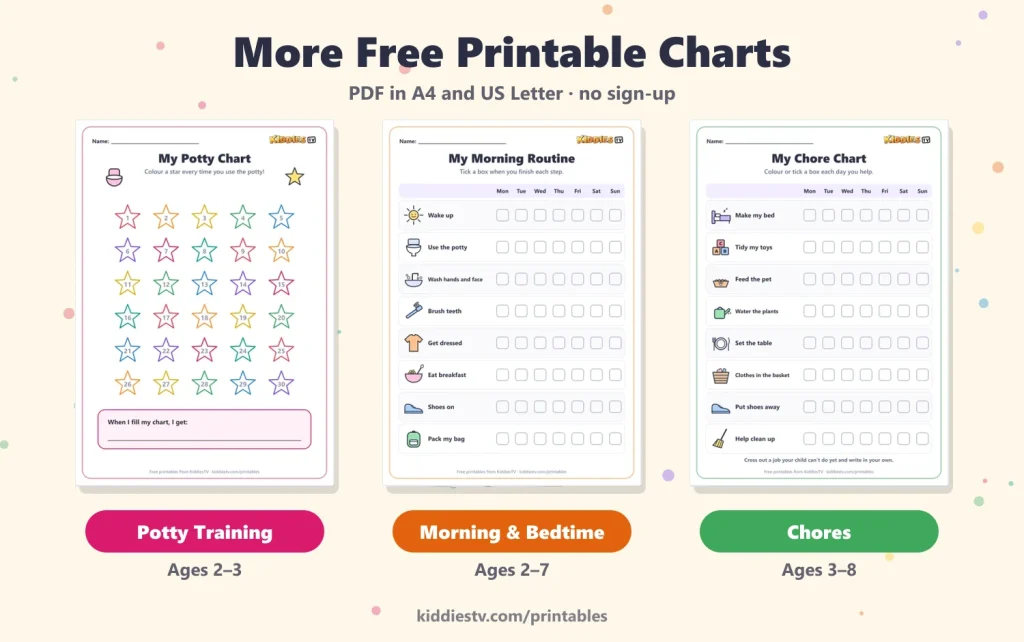
You’ll find all of them, along with tracing worksheets, mazes and coloring pages, on our free printables page.
Common reward chart mistakes (and easy fixes)
- Too many goals at once. Start with one and add more later.
- A reward that’s too far away. Shorten the chart for younger children so the reward comes sooner.
- Prizes that keep getting bigger. Keep rewards small. The stars and your praise are the real reward.
- Forgetting to fill it in. Put the chart at your child’s eye level, close to where the goal happens: the bathroom for brushing teeth, the bedroom for bedtime.
- Using the chart as a threat. “No star if you don’t…” makes the chart feel like a punishment. Keep it positive.
Reward chart questions parents ask
What age can you start a reward chart?
Most children can understand a simple chart from around age two or three, as long as the goal is simple and the reward comes quickly. Younger toddlers respond better to instant praise and a big hug than to a chart.
How long should you use a reward chart?
For as long as it’s helping. For many goals, a few weeks is enough for the new habit to settle in. Then fade the chart out, or switch to a new goal.
Isn’t a reward chart just bribery?
Not when it’s used well. A bribe is offered in the middle of a meltdown to make it stop. A reward chart is agreed calmly in advance and celebrates an effort your child chooses to make. Over time, your praise and their own pride take over from the reward.
What if my child loses interest?
Interest usually drops when the goal is too hard, the reward is too far away, or the chart has been up for a long time. Make the goal easier, bring the reward closer, or let your child decorate a fresh chart with you.
Should siblings have their own charts?
Yes. Give each child their own chart with goals that suit their age, so nobody is compared with anyone else. Younger siblings often love having a chart “just like” their big brother’s or sister’s.
Start small and celebrate
A reward chart works best as a little celebration of the things your child is learning to do on their own. Pick one goal, print a chart, and cheer every star. If you’re working on bedtime, a favorite song can be part of the routine too: our nursery rhyme lyrics have the words to “Twinkle, Twinkle, Little Star” and more to sing together. And if your little one is getting ready for school, read our guide to the signs your child is ready for preschool.
Happy star collecting from all of us at KiddiesTV!
Leave a Reply