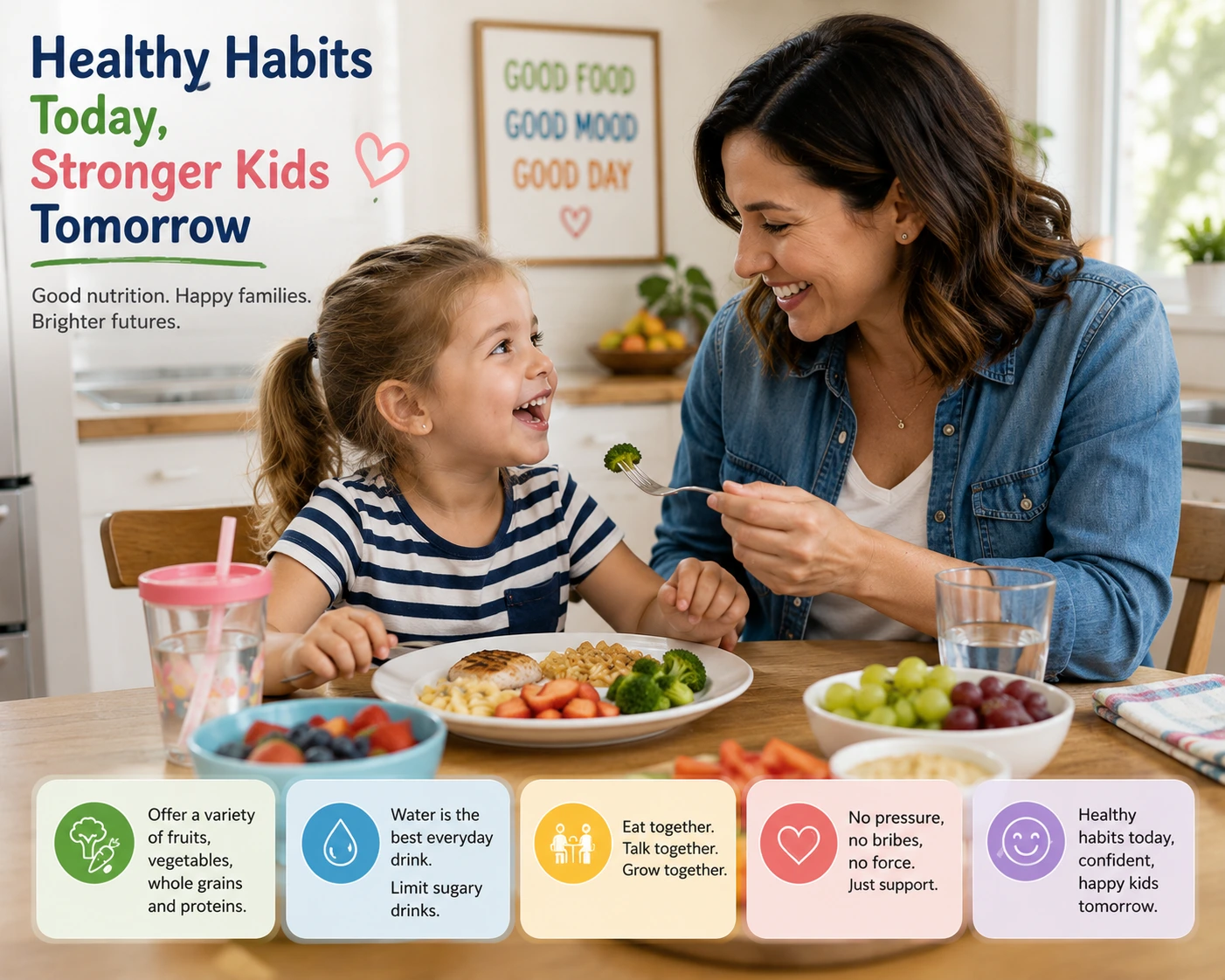
If feeding your child sometimes feels like a daily negotiation, you’re definitely not alone. Kids between 2 and 8 can be wonderfully unpredictable with food. Yesterday they ate two bowls of dal; today they’ve decided dal is their enemy. They may ask for the same breakfast for a week, refuse vegetables without tasting them, or suddenly announce that anything green is “yucky.”
The good news? You don’t need to create perfect meals or convince your child to eat every healthy food. What matters most is what they eat over time, not what happens at one lunch or dinner.
Start with a simple plate
For most meals, think about including 3–4 things: a source of carbohydrates for energy, protein for growth, some fruit or vegetables, and a source of healthy fat or dairy.
That could be something as simple as dal, rice, vegetables and curd, or an egg with toast and fruit. Other easy options include idli with sambar, vegetable paratha with curd, khichdi with vegetables, paneer with roti, or oats with milk and fruit.
There’s no need to make a separate “kids’ meal” every day. Whenever possible, offer a child-friendly version of what the family is already eating.
What if my child refuses vegetables?
This is one of the biggest worries for parents—and pressure usually doesn’t help. Instead of saying, “Three more bites and then you can have dessert,” simply keep putting a small amount on their plate.
A child might need to see or taste a food many times before becoming comfortable with it. Let them explore without pressure. Even touching a new vegetable, smelling it or taking one tiny bite is progress.
You can also involve children in food preparation. Let them wash tomatoes, mix batter, choose a fruit at the shop or sprinkle vegetables onto a homemade pizza. Children are often more curious about foods they helped prepare.
Snacks matter too
Young children have small stomachs, so nutritious snacks can be genuinely useful. Instead of letting them graze all day, try having predictable meal and snack times.
Easy options include fruit with yogurt, cheese and fruit, boiled egg, roasted chana, homemade pancakes, hummus with soft vegetables, or nut butter spread thinly on toast where age-appropriate and safe.
Water should be the main everyday drink. Keep sweets, packaged snacks and sugary drinks as occasional foods rather than everyday habits.
One rule that can make mealtimes calmer
Think of it this way: you decide what food is offered, when it is served and where your child eats. Your child decides whether to eat and how much.
Some days they’ll eat surprisingly little; other days they’ll ask for seconds. Appetite naturally changes with growth, activity, sleep and even mood.
Try not to compare siblings or other children. And don’t panic over one “bad” eating day. Look at the bigger picture across the week.
Most importantly, let meals feel like family time rather than a test your child has to pass. Sit together when you can, eat the foods you want them to learn to enjoy, and keep offering variety without pressure.
You’re not trying to raise a child who eats broccoli on command. You’re helping them slowly learn to listen to their hunger, enjoy different foods and build a comfortable relationship with eating that can last for years.
If you’re concerned about your child’s growth, persistent food refusal, chewing or swallowing difficulties, allergies, or an extremely limited range of foods, speak with your pediatrician or a pediatric dietitian for individualized advice.
Leave a Reply