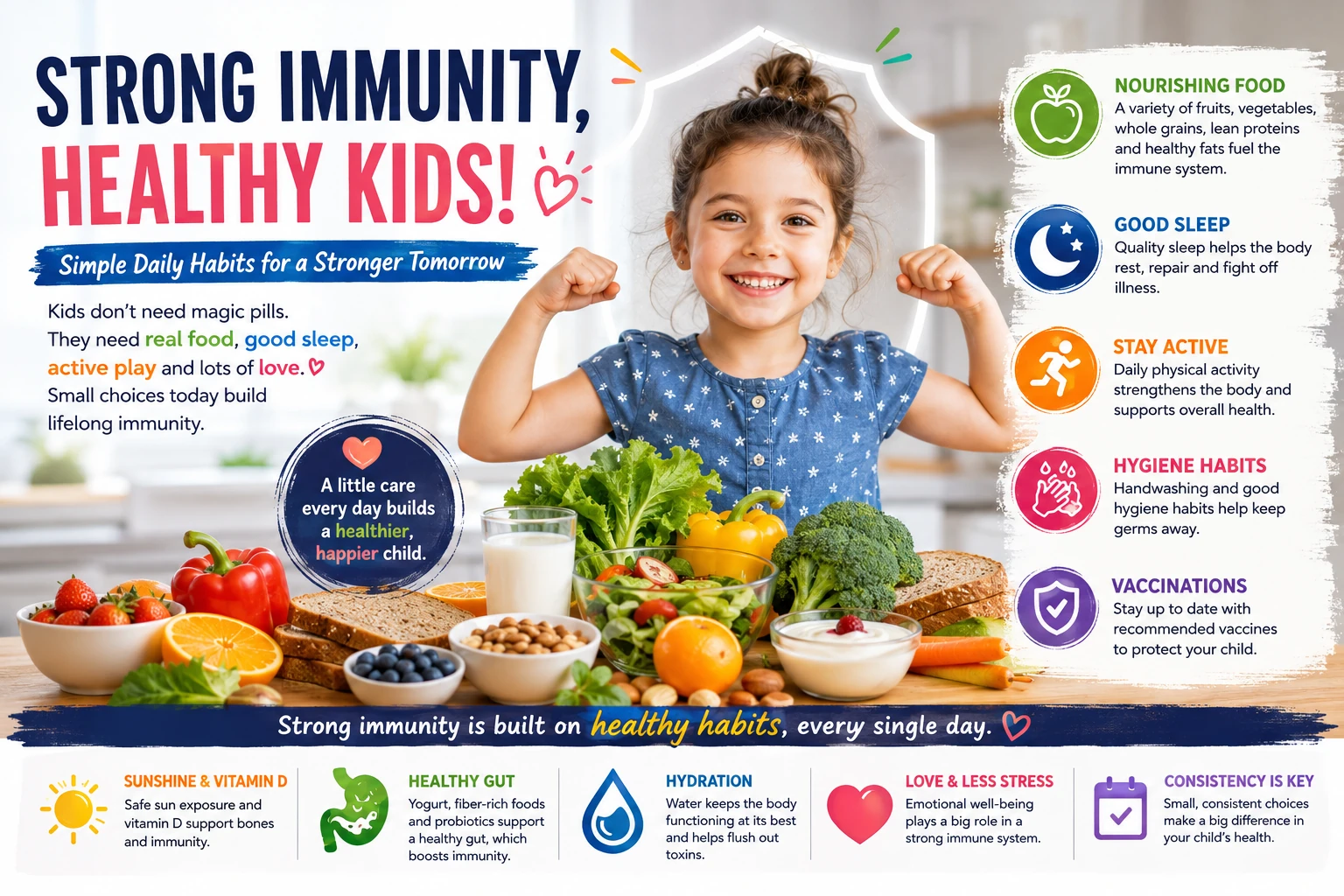
Supporting your Childs Immunity
Every mom knows the feeling: one child at school gets a cold, and suddenly you’re wondering what you can do to keep the whole family healthy.
Is it vitamin C? Zinc? Probiotics? A multivitamin? Or some special “immune-boosting” food?
The reassuring answer is that there usually isn’t one miracle food or supplement. A healthy immune system is built on consistent everyday habits.
And children getting an occasional cold doesn’t necessarily mean they have “weak immunity.” Kids naturally encounter germs as they grow, play and spend time around other children.
Start with food, not an overflowing supplement cabinet
For most healthy children, the best nutritional strategy is simply variety.
Try to regularly rotate foods from these groups:
- Colorful fruits: oranges, berries, kiwi, guava, mango and papaya
- Vegetables: carrots, sweet potatoes, tomatoes, broccoli, spinach and bell peppers
- Protein: eggs, beans, lentils/dal, tofu, chicken, fish, yogurt and other appropriate protein sources
- Whole grains: oats, whole-wheat bread/roti, brown rice and other whole grains
- Healthy fats: nuts and nut butters, seeds, avocado and appropriate cooking oils
- Calcium-rich foods: milk, yogurt, cheese or suitable fortified alternatives
You don’t have to create a “perfect immunity plate” every day. Look at what your child eats across the week, rather than worrying about one imperfect meal.
What about vitamin C?
Vitamin C is important for normal immune function, but that doesn’t mean children need vitamin C gummies every day.
Fruit and vegetables are excellent sources and provide fiber and many other nutrients at the same time. The AAP notes that although vitamin C supplementation may modestly affect cold duration or severity for some people, there isn’t evidence that vitamin C supplements prevent children from catching colds in the first place.
So instead of automatically reaching for a supplement, make vitamin-C-rich foods part of everyday meals and snacks.
Vitamin D deserves a little more attention
Vitamin D plays an important role in bone health as well as immune function. Unlike many trendy “immunity” supplements, children do have established vitamin D requirements.
The AAP recommends 400 IU (10 mcg) daily for infants under 1 year and 600 IU (15 mcg) daily for children over 1 year, considering their overall intake and individual circumstances. Whether your child actually needs a supplement is something to discuss with their pediatrician, particularly when dietary intake is inadequate.
And what about zinc?
Zinc is another nutrient the immune system needs—but more isn’t better.
Rather than routinely giving children high-dose zinc supplements, include zinc-containing foods such as meat, seafood where appropriate, beans, lentils, dairy, nuts, seeds and fortified foods.
If you’re concerned that your child isn’t getting enough because of picky eating, dietary restrictions or another reason, bring it up with your pediatrician rather than guessing at a supplement dose.
Don’t forget the gut
The gut microbiome and immune system are closely connected, which is one reason probiotics get so much attention.
But you don’t necessarily need an expensive probiotic powder.
Foods such as yogurt and kefir can provide beneficial cultures, while fiber-rich foods such as whole grains, bananas, onions, beans and vegetables help nourish beneficial gut microbes. The AAP recommends discussing probiotic supplements with your child’s pediatrician rather than routinely giving them to every child.
The most underrated “immunity supplement”? Sleep.
Nutrition gets most of the attention, but don’t overlook the basics.
A predictable bedtime, age-appropriate sleep, daily physical activity, time outdoors, good hand hygiene, routine health care and recommended vaccinations all contribute to keeping children healthy. Vaccines are particularly important because they train the immune system to recognize specific disease-causing germs.
A simple immunity-friendly day could look like this
Breakfast might be eggs with whole-grain toast and fruit, or oatmeal topped with yogurt and berries.
For a snack, offer fruit with yogurt or an age-appropriate nut/seed butter. Lunch could be dal with rice and vegetables, beans with whole grains, or chicken/fish/tofu with vegetables.
An afternoon snack might be yogurt, fruit, cheese or another minimally processed option, followed by a family dinner containing a protein, vegetables and a grain or starch.
It doesn’t need to be fancy—and your child certainly doesn’t need to eat every “superfood” on Instagram.
So, which supplements are a must?
For most healthy children, there isn’t a universal stack of vitamin C + zinc + probiotics + multivitamins that every child needs.
The AAP states that healthy children eating a normal, well-balanced diet generally don’t need vitamin supplements beyond meeting their recommended nutrient requirements. Supplements may be appropriate when a child has a diagnosed deficiency, a very restrictive diet, inadequate nutrient intake or a medical condition that increases deficiency risk.
It’s also important to remember that supplements aren’t automatically harmless because they’re marketed as “natural.” Excessive doses of vitamins—including vitamins A and D—can be toxic.
The takeaway for moms
Instead of asking “What can I give my child to boost immunity?”, try asking:
“What can I consistently do to support their immune system?”
Think variety on the plate, enough protein, plenty of fruit and vegetables, healthy fats, adequate vitamin D, good sleep, physical activity, appropriate hygiene, recommended vaccines—and a little less pressure to make every meal perfect.
Those simple habits aren’t as exciting as an “immune-boosting” gummy, but they’re a much stronger foundation for a healthy family.
This article is for general educational purposes and isn’t individualized medical advice. Check with your child’s pediatrician before starting vitamins, minerals, probiotics or herbal supplements, particularly for babies, children taking medication, or children with medical conditions
Leave a Reply